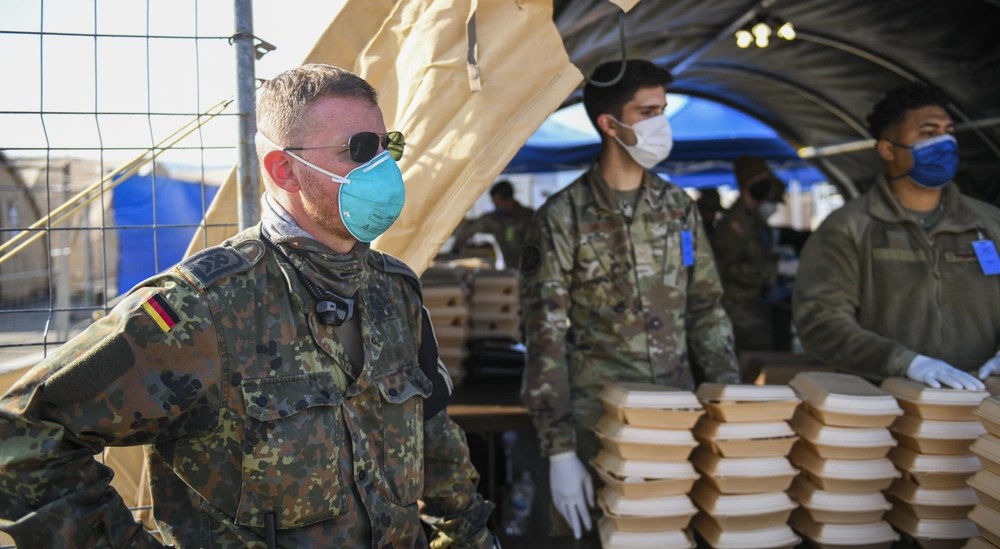
German allies partner with RAB in support of OAR
The German military sent 200 volunteers to Ramstein Air Base, Germany, in support of Operation Allies Refuge throughout the months of August and September.
The arrival of the German military came in response to tremendous demand and a limited number of U.S. military members being capable of supporting due to normal mission operations remaining unchanged.
“It’s been immensely helpful having this joint effort and having everyone come together as a team,” said U.S. Air Force Capt. Todd Locke, 786th Civil Engineer Squadron explosive ordnance disposal flight commander and Pod 3 commander. “Ramstein can only provide so many additional bodies, having the augmentation of the Germans and the other services that are here helping have been huge. We’ve gone from 20 volunteers trying to take care of 3,000 people to close to 60.”
Despite the short notice, the German military response and integration with American and other allied countries was nearly immediate. Upon hearing about a potential response being needed, the German military had their teams sitting alert until their services were officially requested.
“We spoke to our forces to make a reconnaissance team to see where we could support and where it was reasonable to support, from there I prepared the participating military police companies and placed them on hold,” said German feldjager Capt. Roman Kraus, leader for the coordination of the military police at RAB. “Once we heard we were good to go, I alerted all of our supporters to get in their cars and come here as fast as possible, and by the next day, we started our entire response.”
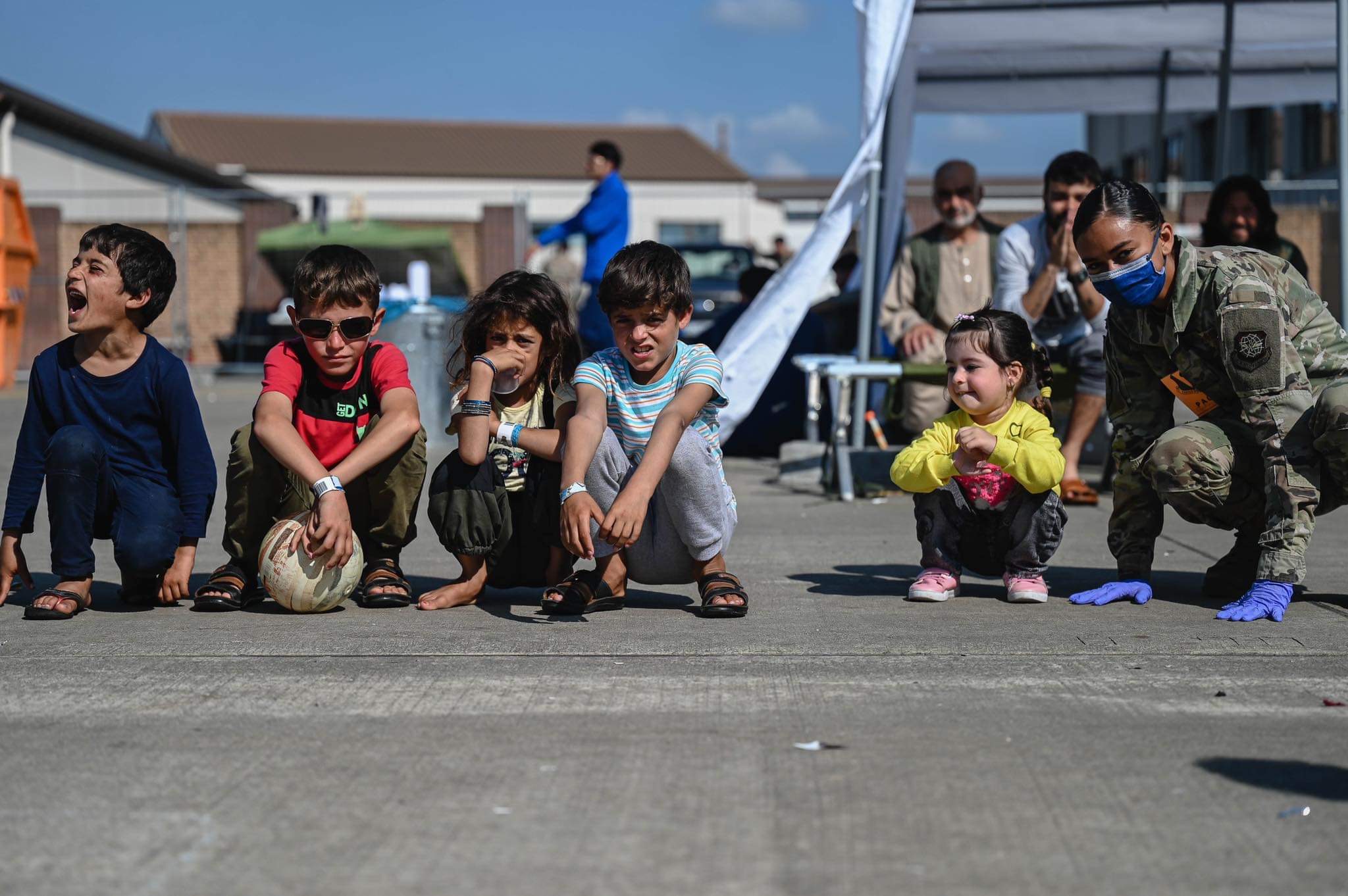
The German military response has benefited the Afghan evacuees by giving them access to food more quickly and ensuring sufficient support to provide other needs within the pods are met.
“The German services have been a big help with food distribution, interacting and playing with the kids.” Locke said. “They’ve been providing a safe environment for everyone, as well as crowd control. When we have contractors in to clean the facilities, they’ve been helping the truck through and are able to communicate with the German truck drivers, bridging the gap of the language barrier that we have.”
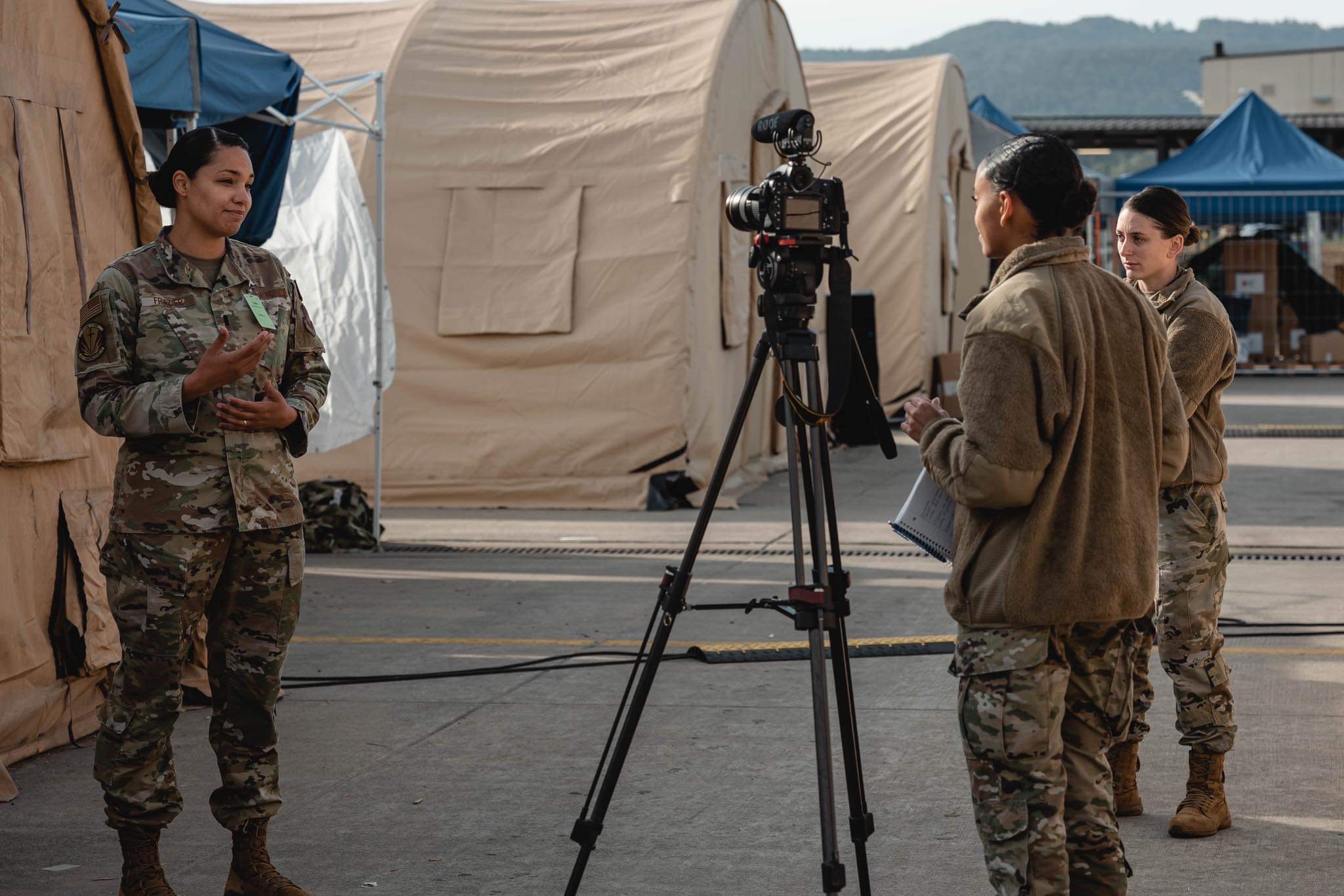
Partnerships like this are what the U.S. Air Force strives for. Providing opportunities to work together in unity and promote mission readiness globally remains at the forefront of every mission.
“Anytime we have the opportunity to work outside of our branch, especially in joint and different environments, we learn their operations and understand how to communicate with them,” Locke said. “It allows us to learn the different nuances surrounding their culture and military; learning their rank structure, how they operate if they’re put in a situation similar to OAR or something completely different. We understand how their military is built, what the different sections are, and know their culture, it helps us bridge that gap quicker.”
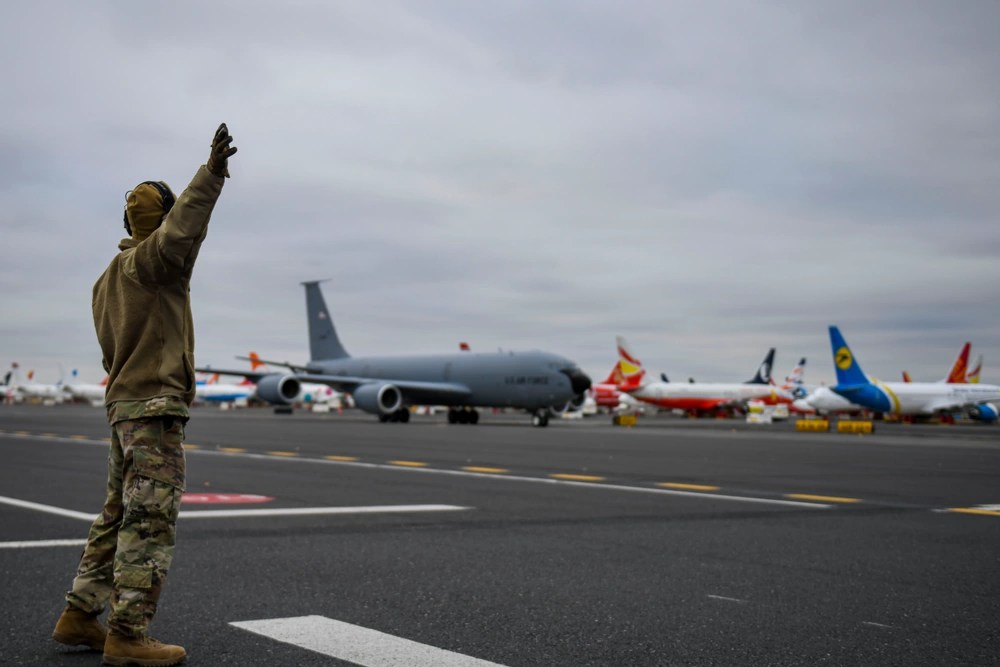
Team Fairchild implements MCA, ACE capabilities at civilian airfield for the first time
Fairchild Airmen from 10 different career fields practiced multi-capable Airmen capabilities, hot-pit refueling, and agile combat employment at the Grant County International Airport in Moses Lake, Dec. 6-7, 2021.
Team Fairchild was the first base in Air Mobility Command to implement hot-pit refueling, MCA, and ACE at a civilian airfield. Practicing these capabilities provides Airmen a variety of skillsets and trades outside of their career fields, improving and accelerating mission support in various locations and situations.
“The concept of MCA is based on training Airmen outside of their Air Force special codes, enabling them to cross-utilize their skills to support different missions and multiple big picture roles within the ACE construct,” said Staff Sgt. Sean Ellyson, 92nd Maintenance Squadron aerospace and ground equipment technician.
The intent behind MCA is to expand Airmen knowledge beyond their main AFSC to broaden their scope of understanding, enabling them to operate without the Airmen with the specific AFSC present.
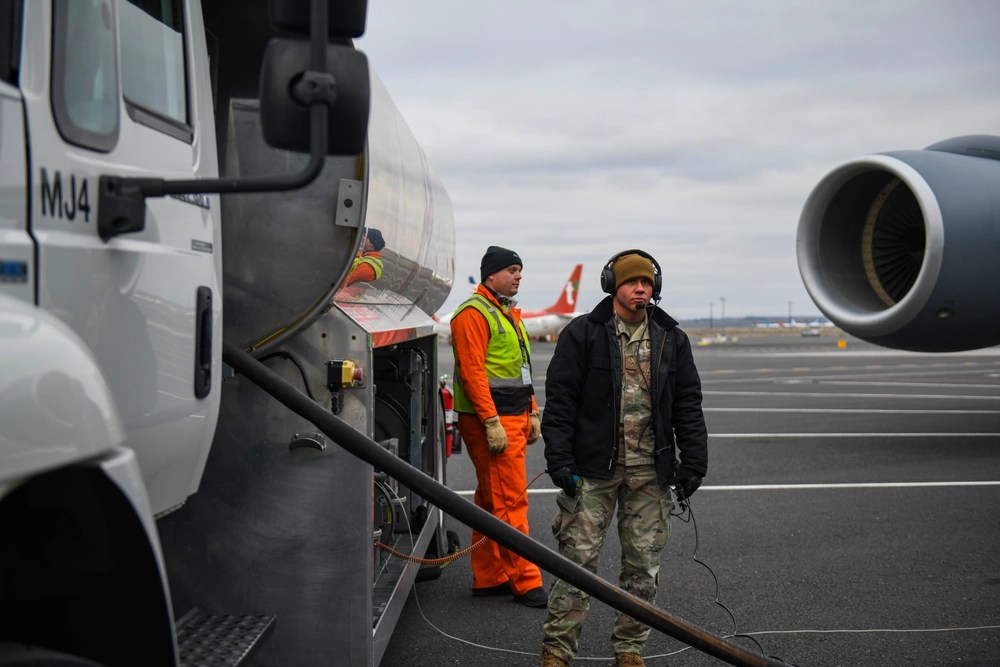
“We’re not doing more with less; we’re building efficiencies within the system and we’re trying to build a lethal package to send down range to forward operating bases while still maintaining manning at a main operating base,” said Tech Sgt. James Shaffer, 92nd Operation Support Squadron boom operator and planner for integrating MCA.
The exercise specifically at the Moses Lake airport gave participants an understanding of their true capabilities to operate out of an unfamiliar location without the usual equipment available on installation.
“We’re simulating a remote environment where we don’t have the amenities of a fully-functioning Air Force base, so we’re having to make do with whatever we have,” Ellyson said. “We didn’t bring the equipment we usually bring on temporary duty assignments or deployments, so we have to coordinate with local agencies to get power equipment capabilities and anything we don’t have here to mitigate possible aircraft malfunctions.”
MCA and ACE was originally developed under U.S. Air Force Chief of Staff Gen. Charles Q. Brown Jr.’s, action orders of “Accelerate Change or Lose,” a concept Fairchild leadership is focused on implementing and practicing on a grand scale.
“Fairchild is the lead wing when it comes to testing ACE, developing tactics, techniques, and procedures for the tanker community,” said Tech Sgt. James Shaffer, 92nd Operation Support Squadron boom operator and planner for integrating MCA. “We used a 13-person team to test what Airmen are capable of doing and how to further train at Fairchild for real-world scenarios.”
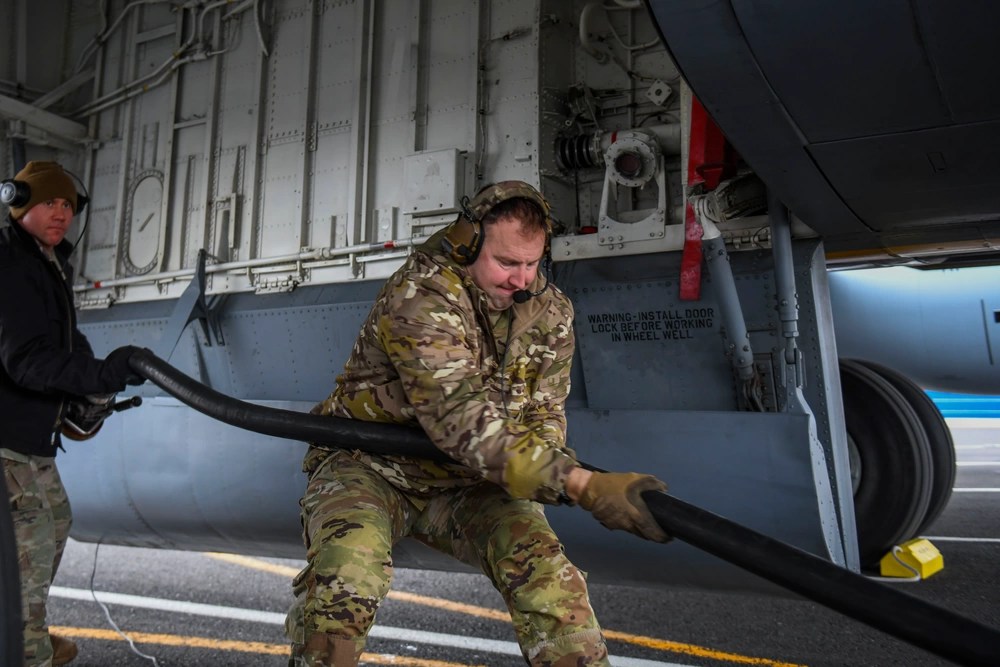
In addition to strengthening knowledge on abilities Airmen are not familiar with, practicing MCA, ACE, and hot-pit refueling at a civilian air station builds and strengthens community partnerships for future endeavors.
“Building these relationships with our community partners allows us to get better training instead of our crews operating and doing and seeing the same thing daily,” Shaffer said. “It gives us the opportunity to branch out to see and execute something unique and gives us a different approach to operate. Our community partners are key to doing that.”
Airmen expanding their knowledge on different AFSCs and how to accomplish operations out of a location other than home station ensures they are not only good enough today but are prepared for tomorrow’s fight.
Spokane Indians take flight for Operation Fly Together
Spokane Indians take flight for Operation Fly Together
Team Fairchild hosted the Spokane Indians minor league baseball team adminstration for an orientation flight showcasing the KC-135 Stratotanker mission, Oct. 27, 2021.
The flight was just one part of Operation Fly Together, a joint partnership built between Fairchild and the minor league team, intended to build deeper relationships with organizations throughout the community and honor local-to-Spokane veterans of the Armed Forces.
“This flight was an amazing experience for us,” said Chris Duff, Spokane Indians president. “We were really able to see what happens ‘behind the curtains,’ and were able to build on such a strong partnership we already have with the base.”
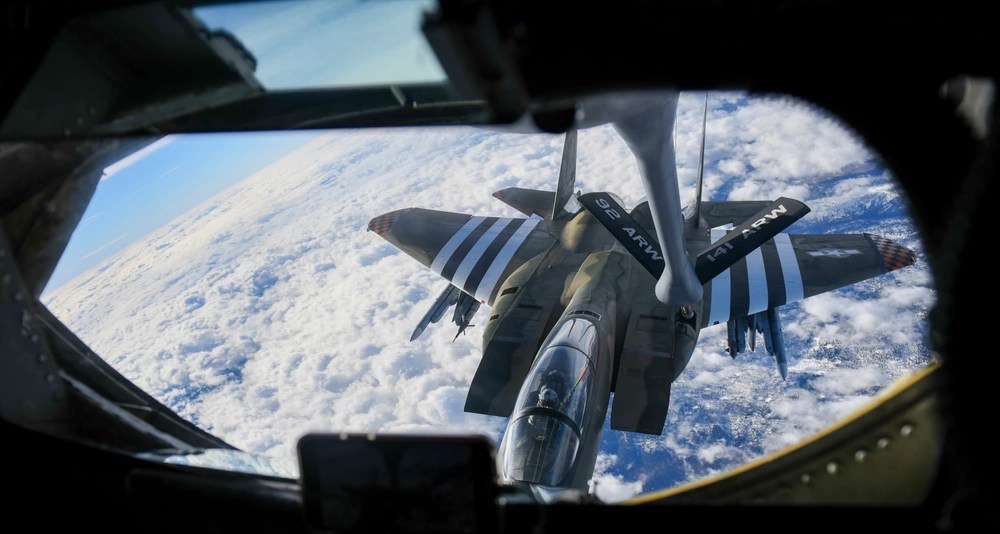
This orientation flight took off on one of Fairchild’s 68 KC-135s and refueled eight F-15 Eagles and one KC-10 Extender.
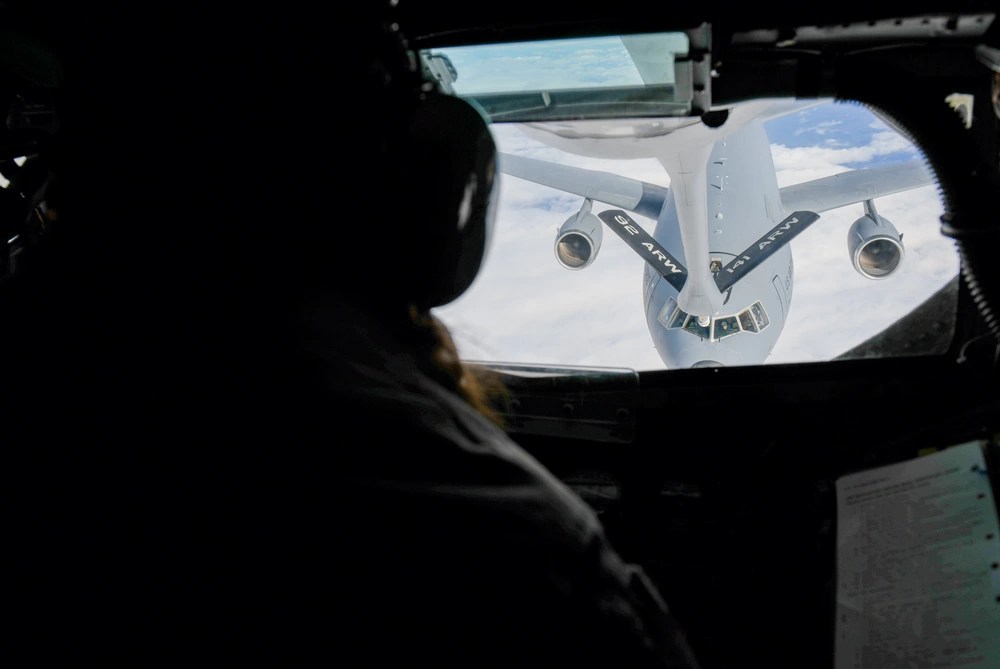
“I’m amazed by the Spokane Indians and everything they do for the military,” said Col. Cassius Bentley, 92nd Air Refueling Wing commander. “Being able to show their team first-hand how incredible our Airmen and aircraft are further showcases our mission and the capabilities we have, and that makes this partnership even stronger.”
Flights like these are vital because they allow Airmen and community members to openly communicate in a unique environment.
“We were in awe with how professional each Airman was,” Duff said. “Furthermore, it was such a great opportunity to talk to the Airmen and get a real feel for what the military life is truly like.”
Orientation flights are a staple in Air Force community partnerships, and allow local community members to witness the critical role Team Fairchild plays in Extending Global Reach for America.
“A word after a word after a word is power.”

 Kiaundra Miller Portfolio